
How to Use a Swedish Dishcloth: Step-by-Step Guide
A Swedish dishcloth doesn't work quite like a sponge or a paper towel, and using it the right way is what makes it last for months instead of days. The process is simple: wet it, wring it, use it, rinse it, wring it again, and hang it to dry. Here's each step in detail, plus the mistakes that shorten a cloth's life.
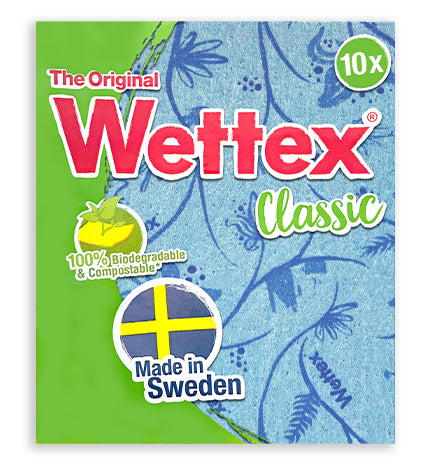
The 6-step process
1. Wet it
Run the dry cloth under water — warm or cold both work — until it's fully saturated. Straight out of the pack, a Swedish dishcloth is stiff; this first wetting is what makes it soft and flexible.
2. Wring it out gently
Squeeze the cloth until it's damp rather than dripping. A firm squeeze is enough — avoid twisting it hard or repeatedly, which stresses the fibers over time and shortens the cloth's life.
3. Use it
Wipe counters, mop up spills, absorb liquid, or clean dishes. A genuine Swedish dishcloth absorbs up to 15x its own weight and holds up on most kitchen and bathroom surfaces. For very greasy pans, a quick pre-wipe with a paper towel first helps the cloth go further between washes.
4. Rinse it out
Rinse thoroughly under running water right after use, before food particles or grime have a chance to dry onto the cloth. This one habit is most of what keeps a dishcloth from staining or smelling.
5. Wring it again
Same gentle squeeze as step 2 — get out as much water as you comfortably can before it goes to dry.
6. Hang it to dry
This is the step most people skip, and it matters more than any other. A cloth left damp and balled up in the sink stays wet and can start to smell within a day. A cloth that's hung open and fully air-dries between uses can go weeks without odor — that's the entire trick to a Swedish dishcloth not turning into a smelly sponge. Hang it over a faucet, a drying rack, or, easiest of all, a dedicated hanger like the Pluring push-in hanger, which holds the cloth open so both sides dry fully.
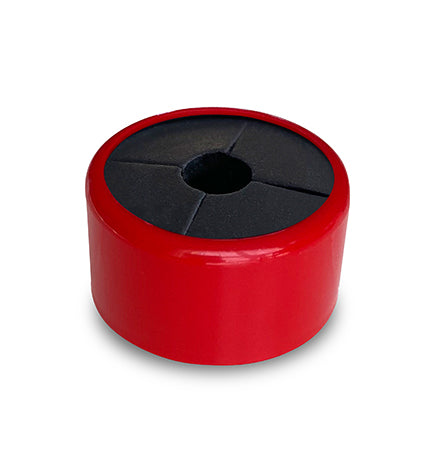
Weekly deep clean
Daily rinsing keeps a cloth usable, but it's worth sanitizing once a week on top of that. Any of these work: run it through the dishwasher on the top rack, boil it in water for about 5 minutes, or run it through a gentle 86°F (30°C) machine wash cycle.
What to avoid
- Fabric softener. It coats the fibers and cuts absorbency.
- Bleach. It breaks down the cellulose fibers over time.
- The tumble dryer. Heat can shrink or warp the material — air dry only.
- Leaving it wet and balled up. This is the single biggest cause of a dishcloth smelling bad — it's almost never about washing, it's about drying.
How long should one cloth last?
Followed this way, a single Wettex cloth typically holds up for 6–9 months of daily use before it's time to compost it. Life span varies by brand and how it's used, but drying it properly between uses is the single biggest factor in how long any Swedish dishcloth lasts.
Common questions
Can I put it in the dishwasher? Yes — top rack, alongside a normal load.
Why does mine smell even though I wash it? Almost always a drying problem, not a washing one. Make sure it's fully open and hung between uses rather than left folded or balled up.
Does the water need to be hot? No — cold or warm water is fine for daily wetting and rinsing. Save hot water (boiling) for the weekly sanitizing step.
Want to understand the material itself first? Read what a Swedish dishcloth is and what it's made of. Ready to pair your cloth with a proper hanger? Shop the Pluring push-in hanger, or shop the original Wettex dishcloth.